Monday, July 15, 2013

The Traveling Story - Season 1 - Episode 2


I had the huge honor of being part of the first installment of the Traveling Story! We five authors have been biting our nails waiting to share this with all of you--I hope you enjoy it as much as we did!

THE TRAVELING STORY!

What is the Traveling Story?
5 Authors. 5 Days. 1 Story.
Each season of The Traveling Story will feature 5 well-known authors collaborating on one original, kick-ass story, with each author writing one of five episodes.
The full story will be revealed over the course of a week, with each episode appearing on the blog of the author who wrote it.
How Does it Work?
There are only three rules for The Traveling Story:
1) No brainstorming, outlining, or discussion of plot ahead of time. The first author writes the first episode of ANY kind of story they want and the next author picks up where that episode leaves off, taking it WHEREVER they want to go! The last author ends the story however they see fit!
2) An author cannot make changes to any previous episode. Each author has total creative control over their OWN episode only, but it has to continue where the last episode leaves off.
3) HAVE FUN! As you’ll see from the awesome story that came out of this, we don’t take ourselves too seriously! The Traveling Story is meant to be fun for the writers but especially for the readers!
Season 1 Authors:
Jessica Brody
Jessica Khoury
Emmy Laybourne
Lish McBride
Gretchen McNeil
*Don’t forget to LIKE The Traveling Story on Facebook where we’ll be posting links to EVERY episode, so you never miss out on a piece of the story!
And to further entice you, we’ll be giving away an awesome Traveling Story prize pack featuring a book from EACH of the season 1 authors (enter at the bottom of this post.)
I want to take a quick moment to say THANK YOU to author-extraordinaire Jessica Brody for her hard work in making this happen! She is the brains behind the whole operation and has gone the extra mile in making this story super special. *applause*
If you missed the first part of this story, find it now on Jessica Brody's blog!!

Don't forget to check out the Traveling Story Pinterest board!
And without further ado…here is THE TRAVELING STORY SEASON 1!


Episode 2

by Jessica Khoury


Keeping my eyes trained on the doors of the coffee shop, I leaned against the wall, out of the way of the rushing pedestrians that flowed up and down the street like blood rushing from an open wound, never stopping, never slowing, making my head ache. I hated New York. I could hear Gretchen’s words to me that morning, replaying like a song lyric in my head: Just hang in there, my boy, and get the job done, and you can be on a plane and out of there by midnight.

I flicked the watch on my wrist out from under the sleeve of my sports coat. 5:10. Just as Gretchen said he would, the guy I was tailing left the coffee shop sans one silver box, his hands in his pockets, girls practically dropping as he passed, their eyes mooning after him. He was in a hurry, jostling his way down the busy sidewalk, and he nearly bumped into a stroller pushed by a mom in jean capris and Crocs, to whom he apologized with his British accent. Cheesy as hell. And also as fake as the “Rolexes” the guy behind me was trying to sell to a pair of Korean tourists, but the mom didn’t seem to realize that. She blushed and ended up apologizing to him, but he’d already moved on, disappearing into the crowd. Whatever. I had it all on tape. I hit stop on the handheld recorder I’d been surreptitiously filming with and slipped it into the Jansport backpack I had slung over my shoulder. I wasn’t there for the so-called Brit; I was there for the box. And whatever sucker he’d passed it to.

I waited. I checked my watch again. 5:11. A group of hipsters ambled out of the coffee shop, but none of them seemed to be my target. One of them blinked at me over her faux-vintage sunglasses and said, “Nice scarf.” I scowled and my hand went to the keffiyeh around my neck, and she shrugged and pushed her glasses up her nose, turned to join her friends.

5:12. I shot a glance at the watch dealer. The Koreans must have caught on. They were moving away, but he was following them and waving a watch, all smiles and charm. Then he caught me looking and met my eyes—and my stomach jerked. His eyes shifted, just faintly, just for a breath of a moment, but enough for me to realize this was no New Yorker. This watch dealer was as phony as his goods. He wasn’t even from this galaxy.

I cursed myself inwardly for not seeing it sooner, because now that I knew what he was, I noticed all the signs—the limp in his step, the smell of burnt rubber, the way he flinched whenever someone walked by him. He was here for the same reason I was—that silver box, or rather what was inside it. And I’d rather die than let him lay one scaly finger on it.

“By all that is holy,” I muttered, fumbling for the camera, wishing it was a gun, not sure what I intended to do with it. “You frickin bast—“

BOOM.

The explosion of sound ripped the space where the watch dealer had been standing. I’d seen a teleport before, but never so close, and the sound is enough to stop your heart. There wasn’t any smoke or flames or that kind of movie-effect stuff; it’s just the guy was there—and then he wasn’t. The boom was the sound of the air closing in on the space where he had been and the dimension walls slamming shut behind him. At least, that’s what Gretchen theorized. And as I knew all too well, Gretchen had been wrong before.

Everyone around me was freaking out. They had to think it was a bomb or something, some terror attack, probably. There were people cowering behind trash cans, hydrants, running into and out of buildings, looking around in bewilderment as they wondered what they were supposed to be running from. No one seemed to have noticed the watch dealer’s sudden disappearance. My ears were ringing still, but I had to move. There was no way my target hadn’t heard the boom of the guy teleporting, and he—or she—would be on the move for sure. Several people were spilling out of the coffee shop, one of them a tall, built guy in leather and denim, his head tattooed. Could that be him? No way to tell. Too much confusion, too much noise. He headed north, away from me, and I leapt into action, rushing after.

But before I could get three steps, a girl came careening through the coffee shop doors and barreled straight into me with the force of a frickin rhinoceros. She and I tangled up, falling, yelling. My knees bit the concrete and my palms got all scuzzed up in that painful way that doesn’t look bad but hurts like hell. The camera flew out of my bag and skidded across the pavement, nearly getting trampled by a suited businessman.

“Are you crazy?” I asked, and at the same time, she said, “What was that noise?”

I grabbed the camera and thrust it back into my bag. There was still a lot of screaming and mayhem in the street. The tattooed baldie had disappeared. I cursed again, this time aloud. As I disentangled myself from the girl, I realized my keffiyeh was drawing some attention—narrow glares, suspicious whispers, pointing fingers. Typical Americans, assuming the nearest Arab had to be the terrorist. Then a hand slipped into my line of sight, distracting me from the stares turning my way.

It was the girl, standing over me and offering me a hand up, which I took. Leggy, brunette, enormous blue eyes behind oversized tortoiseshell glasses. Cute, in a kind of nerdy way. I found I was glad I hadn't smashed those glasses when I knocked her over. Which was stupid; I didn’t have time to hang around worrying about some clumsy chick’s glasses—I had to find my guy. Gretchen’s fury would be nothing compared to the consequences of that silver box falling into the wrong hands.

“Generally,” the girl was saying, her words background noise to the riot of panic in my head, “I like to at least know a guy’s name before he invites me to play Twister.”

“Rasul,” I said absently, and then I grimaced and pressed the tips of my fingers to the bridge of my nose. Of all the idiotic, rookie mistakes! The fall must have knocked my brain clean off its axis—I couldn’t believe I’d just spilled my name to her like that. For all I knew, she was my guy.

And that’s when my eyes dropped to her hands, to the silver box she was clutching.

“Ah,” I said slowly, my eyes fixed on the box as the chaos around me fell away, as if I were on a boat pulling swiftly away from a crowded shore. This is her? This is my target? I couldn’t believe it. She was no older than me—and as Gretchen all too often reminded me, even I was too young for this kind of job. I squinted at the girl. Maybe she was older than she looked. Maybe if she took off those glasses, she’d suddenly age ten years, changing identities Clark Kent style. If so, she was a hell of an agent—probably one of the best. “And what did you say your name was?”
            
She must have noticed me staring, because she looked down at the box. “Oh.” She paused, as if unsure how to reply. Then, lifting her face, her eyes confusedly tracking the mania behind me, she said, “Lucy. I’m Lucy.” As if she were reminding herself of it.


An alias if I ever heard one. The pause was a dead giveaway.

Well, whoever this Lucy really was, I’d royally screwed up by not only smacking into her but giving her my frickin name. If Gretchen could see me, she’d probably be hemorrhaging. I needed to follow this Lucy, see where she was taking the box, so we could finally figure out who we were up against here, what the competition was, but now she’d be spooked. She’d lay low, cover her tracks, and the trail would go cold.

“Some kind of car wreck?” she asked, her eyes still scanning the street. I turned, saw that things were starting to quiet down. Police had arrived and were sniffing around, a couple of them shooting me suspicious looks. Most of the spectators had grown bored and moved on, looking mildly disappointed the source of the noise hadn’t been something more interestingly destructive. Idiots. You’d think they’d rather it was a bomb or something.

But I knew better.

I knew the truth was much worse.


To be continued…

Follow the Traveling Story! Below is the post schedule:
Episode 1 – July 15 – Jessica Brody
Episode 2 – July 16 – Jessica Khoury
Episode 3 – July 17 –  Lish McBride
Episode 4 – July 18 – Gretchen McNeil
Episode 5 – July 19 – Emmy Laybourne
And as promised, here is the giveaway (Open Internationally)

a Rafflecopter giveaway

Monday, June 10, 2013

How to Travel Like a Writer


One of my most absolute favorite things to do is travel, especially if it's to a place that's new and completely out of my comfort zone. If the people there speak another language, all the better. If it's a bit rough and wild and has a lot of really cool wildlife--perfect!

If you're going to be a writer, it's essential that you try new things, whether it's food, books, or places. In my opinion, one of the best ways to ignite the creative spark and lure your muse from hiding is by traveling. There's something about a totally new environment that opens our eyes and our writing pores so that we can't help but be inspired.


I believe that I do my best writing when I'm not at home. I drew more inspiration from a month in Kyoto or a week in Germany than I ever did in an entire year in my hometown. I think there's a kind of shutting down of the senses that happens when you're in one place for a long time, when you start to see less, hear less, notice less, because everything around you is so familiar and expected. And noticing what's around you is absolutely critical to good writing, because before we can write interesting things, we have to see and learn and do interesting things. That inspiration has to come from somewhere. Even if every book you ever write is set within a two-block radius of your current address, you can still benefit from getting away and seeing the world. Travel opens your mind and expands your capacity for creativity in a way few other things can--it's like the ultimate imagination steroid!


Here are some ways that you, as a writer, can best utilize your travel-time:

1. JOURNAL
This is a must. When you're out and about wandering new streets and trying new foods whose names you can't pronounce, the writer in you is guaranteed to stir. It's essential that you capture the flavors and emotions of these new experiences right away, before their impact fades and the details become blurry in your memory. Carry a journal at all times, and never let a day pass without describing everything you can think of, even the silly little occurrences that appear to have no significance. Even if you never use the exact information you recorded, I promise you this exercise will not have been in vain. This discipline--particularly if carried out every day, even at home--teaches your brain to turn what you see, hear, and otherwise experience into words, sentences, stories. This is what differentiates you from the other tourists, who are there to simply consume an experience. As a writer, you can never just consume--you have to go on to create. By journaling as you go, you are becoming better at transforming experiences into art.


2. ASK QUESTIONS
It's easy to get overwhelmed by the new-ness of a place and simply let it wash over you while you sit passively by. But don't let that happen! Engage with your surroundings. If you have the benefit of a tour guide or local companion, pepper them with questions. You might feel silly--and yes, you might look a bit silly too--but who cares, really? I've never met anyone who wasn't delighted to expound on the stories and details of their hometown or country. We want to share our worlds with other people, so don't be shy. Anyway, if you meet some rare disgruntled local who doesn't want to talk you can always run away and find someone more approachable. You've got to learn all you can, because it's entirely possible that your next great story will be inspired by some crucial piece of information you don't yet know--but the bus driver or the waiter or the fruit vendor on the street corner does. Always live with the expectation that the next person you meet will lead you to your next great story--and you'll only find that story by asking questions.


3. BE DARING
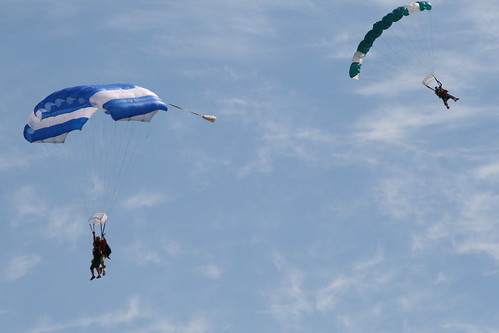
This makes me think of the writer played by Jodi Foster in the film Nim's Island, who writes fantastic adventure stories--but is terrified of even leaving her own apartment! You mustn't let fear stop you from living new experiences. Push yourself and actively seek to step outside your comfort zone. Does the thought of talking to a stranger scare you? Does the prospect of a country where everyone speaks another language put a knot in your stomach? Are you terrified of sleeping outdoors or jumping out of airplanes or eating a squid with its tentacles still intact? Then these are the things you must do. Your writing should terrify you. It should stretch you and lure you into frightening new territory. Face these fears physically, and your daring will be reflected in your writing.


4. SEEK AUTHENTICITY
It's easy to get caught up in cheesy commercial tourism. You know what I mean--the places that are built specifically to cater to wide-eyed, slack-jawed tourists with the floral shirts and oversized cameras and sunscreen rubbed not quite all the way into their faces. This sort of travel can certainly be inspiring, and I won't say that it can't be fun--because it can be--but if possible, take the road less traveled. Seek authentic experiences instead of the ones that might be a tad bit, um, how shall we say, exaggerated or even entirely manufactured to feed the expectations of tourists. I'm talking about shows, tours, or attractions that are based on stereotypes instead of a country or region's actual cultural or ecological circumstances. Hokey imitations will never be as fulfilling as the genuine article, whether we're talking about purses from Dooney and Bourke or safaris in the Serengeti. Wander off the beaten path, get in touch with a country's true heartbeat, talk to the real people who live there, find the unexplored places and the wild countryside. Authentic writing, even if it's ultimately set on the fantasy moon of the planet Gilgorax, is based on authentic people, places, and stories.


5. TRAVEL RESPONSIBLY
Tourism both fuels and kills economies, cultures, and ecosystems. Though it can create a lot of jobs and financially stimulate an area, it has the unfortunate possibility of destroying the very thing that makes it such a desirable travel location. Mt. Everest is called "the highest junkyard on Earth" due to the amounts of garbage left on its slopes. Yellowstone is riddled with tourists' names carved on trees and landmarks. The Great Wall of China is being slowly eroded by tourists taking pieces home and developers turning parts of it into theme park-like areas. Mass tourism to certain wildernesses can ultimately drive away the wild game that was the original attraction. Tourism growth can drive up property values in a town, making it much more difficult for the town's native residents to live there. Thankfully, there are alternative ways to travel that are both fun, inspiring, and environmentally and culturally responsible. Some of these are ecotourism, agritourism, and voluntourism. If you're looking into traveling in the near future, I encourage you to look up these alternatives to mass, commercial tourism, and the advantages they offer to you, the local communities, and the local ecosystems. I'll admit, this point doesn't have as much tie-in with writing--it's just something I am passionate about! =) And just to prove how amazing ecotourism can be, check out this list of amazing ecolodges around the world!


I hope you'll consider the advantages and inspiration that traveling can offer you as a writer, and that wherever your road takes you, you'll be ready with a journal in hand! Happy traveling and happy writing!

Cheers!
Jess


Photo credit: Petar Milošević / Foter.com / CC BY-SA
Photo credit: betta design / Foter.com / CC BY-NC
Photo credit: Tomas.Quinones / Foter.com / CC BY-NC-SA
Photo credit: Ryan Harvey / Foter.com / CC BY-SA
Photo credit: Jane DH / Foter.com / CC BY-NC
Photo credit: JKDs / Foter.com / CC BY

Monday, April 29, 2013

Ship it like FedEx--What Writers Can Learn from the Fandoms


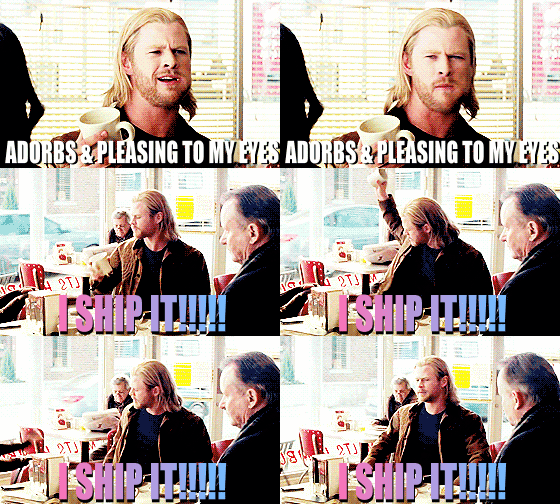
SHIP, noun, derived from the word "relationship", is a general term for fans' emotional and/or intellectual involvement with the ongoing development of romance [I rudely interject here to expand definition to any relationship, not just romantic] in a work of fiction.
(according to Wiki Answers, anyway) 

 From John/Sherlock to Doctor/Rose, Hermione/Ron to Edward/Bella, Katara/Zuko to Rapunzel/Jack Frost, ships are as varied as the fans who exist to create them. The term was coined from the word relationship, and is used as in "I totally ship Elena and Damon in The Vampire Diaries" or "do you get the whole Mericcup ship? Because I don't." (but seriously I do--because ADORBZZ)


Though these terms are relatively new, we've been falling in love with couples for as long as we've  been telling stories. And in my opinion (and for the sake of this post) ships don't have to just apply to romantic relationships--they can also include platonic but nevertheless compelling bromances and friendships (John/Sherlock or Merlin/Arthur) or even rivalries (Sherlock/Moriarty). 


Anyway, this wasn't meant to be a lecture on fandom subculture, but rather a look at what we as writers can learn from the emotional investment inspired by ships. First, I want to note--as a writer of an original piece of fiction, you'll have pretty much no control over the ships fans might create with your characters, so be prepared: anything (and anyone) can happen. So I'm not talking about ways to create ships that fans will carry on--no, quite the opposite. What I want us to do is look at our works with our own ships in mind.

Who do you ship in your current WIP? Have you thought about it? See, I think what defines a ship isn't the individuals involved in it--but the new character their interaction creates. A ship is a like a whole new character in and of itself; it's the hybridization of the characters' personalities. The inside jokes, the shared looks, the history between them--all that drama and interaction that makes their relationship a living, breathing character of its own.

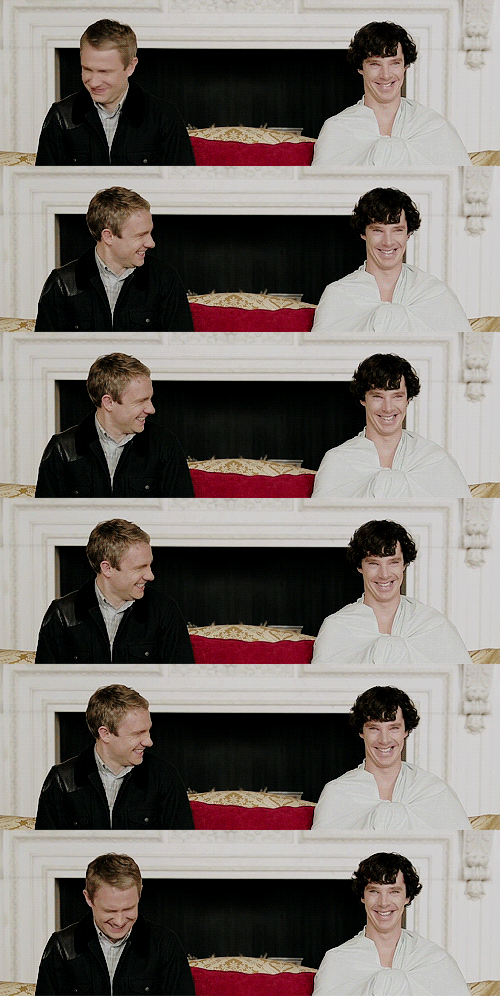
John Watson and Sherlock Holmes have one of the oldest bromances in history (Sherlockians have been around for over a hundred years!) because their relationship is so compelling (even without being romantic, which brings us to one of my greatest pet peeves--the wholly unnecessary romanticization of friendships like Holmes/Sherlock or Harry/Hermione--friendship is powerful enough without having to be romantic!--but for your sake I'll nip this rant before it buds but don't be surprised if you come back to this blog at some future time and see my opinions on this topic blathered all over the place with vehement abandon). 


Eccentric Holmes is brilliant and aloof, but what makes him relatable is his need for a friend--Watson--who humanizes him and keeps him anchored. Obversely, haunted by the ghosts of the war he's fought in, Watson presents a character struggling to reintegrate himself into normal life but in desperate need of someone who will inspire him with a new purpose. Two compelling characters brought together like this create an even more compelling relationship, and the appeal of the Sherlock Holmes stories revolves on their quirky friendship (which does NOT need to be romantic--oh, wait, sorry, I promised I wouldn't go into this rant).

Anyway. Ships are something we writers can look at when creating our stories. We ought to develop relationships with the same care and forethought as we do our characters and worlds. Don't just think about who your characters are individually--but who are they when they're together? How do they change each other? How is their interaction special and compelling?

You can use this lens to view not only the romantic pairings in your story, but also the friendships and even the rivalries. Almost as compelling as Holmes/Watson is Holmes/Moriarty, the hero vs. his arch nemesis. Their rivalry is fascinating--the contest between two ingenius masterminds, one for evil, one for good, transcends the ordinary hero/villain relationship. Each is fascinated by the other and their verbal battles are as interesting as their physical ones.


Stories take on whole new levels of meaning and intrigue when characters are defined by their relationships to other characters--and this adds a certain realistic bent as well. Think about yourself: what matters most to you? Most of us would answer in terms of our relationships, the people we love (not, probably, so much the people we hate--the real world seems to be regrettably lacking in arch nemeses these days, wouldn't you say? Thank God for fiction!) We tend to define ourselves in terms of the people around us, by our parents, our friends, our significant others. You are not an island and neither should your characters be. 

Maybe the general rule in writing characters should be this: Where two are gathered, three are present. Character A, Character B, and the Relationship Between Them. As the fandoms have zealously shown, it's relationships above all else that readers and fans will connect to and love. It's the relationships which are most human and most intriguing that we love most. They are the source of the greatest drama, the deepest emotion, and the strongest motivation. So use them to their fullest! Don't just create characters--create the links between them with equal care.

And be creative in the kinds of relationships your story can include or center on. Here are some examples of my favorite pairings and their dynamics:

Friendship
Sherlock Holmes/John Watson
Shawn Spencer/Burton Guster, from Psych
Elphaba/Galinda, from Wicked
Calvin/Hobbes
Claus Valca/Lavie Head, from Last Exile

Master/Servant
Jeeves/Wooster, from the books by P. G. Wodehouse
Merlin/Arthur, from the BBC show Merlin

Romantic
Tenth Doctor/Rose, from Doctor Who
Clark Kent/Lois Lane, from Smallville
Aang/Katara, from Avatar: The Last Airbender

Rivalry
Sherlock Holmes/James Moriarty
Superman/Lex Luthor
Harry Potter/Voldemort

Siblings
Katara/Sokka, from Avatar: The Last Airbender
Meg/Charles Wallace, from A Wrinkle in Time
Fred/George Weasley, from Harry Potter
Frank/ Joe Hardy, (I'll always love those Hardy Boys!)

I think most of us would agree that non-romantic relationships can often be as endearing as romantic ones, so don't be afraid to develop your characters' friendships and rivalries as much as their romances.

Writing exercise:
1) Make a list of your favorite pairings; try to find one for each category. Then describe their relationship--not the individual characters, but who they are together. 

2) Do the same with characters in your current WIP. Here are some questions to get you started:

- what does each character in my pairing love most/hate most about the other?

- what would each character's response be if the other died?

- how would another character, not in the pairing, describe the two characters when they're together?

- what would each character change about the other's personality?

- what does each character envy most about the other?


These are just to get you started. Be creative! Explore the relationships of your story as you would the characters, the world, the plot. Don't just assume that because you throw two individuals together, a relationship will just happen. It takes care and intentional work on your part, just as it would if you were building a relationship in real life.

What do you think?
I'd love to hear some of your favorite ships and character pairings! Sound off in the comments, and share why you love those pairings in particular.

Monday, March 18, 2013

Book Updates: Invisibility & Vitro

Two books to talk about:

1. I finished reading Invisibility by Andrea Cremer and David Levithan, and I loved it. It's the story of a boy who's been invisible his entire life, and what happens when he meets the only person--a girl his own age--who is able to see him. The moment I heard what the book was about, I knew I had to read it, and was lucky enough to snag an ARC. Guys--it rocked! It was sweet, surprising, intense, and triumphant--a fast-moving read with fresh, likable characters and two distinct voices (the story is told alternatively through Stephen's and Elizabeth's perspectives). The pub date for this book is May 7--I know, I know, absolute ages!! But you should totally pre-order it because it is worth it. In fact, to justify my own pre-order of the hardcover, I'm giving away the ARC below--so be sure to drop your name in the hat if you want an early peek! 


2. I finally got to reveal the title and synopsis of my next book!! It's called Vitro and it's coming out early winter 2014. It's not a sequel to Origin but it is set in the same universe, so you'll see one familiar character from Origin. Haven't revealed the cover yet (but I've been sitting on it since last summer so I'm really dying to share--all that to come!). Anyway, you can read the synopsis and add it to your to-read list here!

Contest ends March 26. Winner will be contact by email and will have 14 days to respond or your prize will be forfeited. US and Canada only, please!


a Rafflecopter giveaway

Thursday, March 14, 2013

On Inspiration: How To Find Your Story


This post is adapted from the presentation I give when I speak at schools. I added this topic to my presentation after I started receiving a good many emails from students telling me they wanted to write a story, but had trouble coming up with an idea that was fresh and interesting.

If you're a writer just starting out, that can be really tough. I know it was for me. It took me years to separate my ideas from the books I read, to move into a place where my inspiration became original and personal, instead of just me recycling the stories and characters I read about. This isn't a bad thing--this imitation of other writers. It's how we learn, and I believe most writers start off that way.

For example, my first novel (which I wrote at age 13, when I was in the height of this story-stealing phase) actually started out as fan fiction of the Redwall series by Brian Jacques. When I realized I couldn't really a call a story my own when I was basically copying another writer's world, I changed the species of my characters from squirrels to humans, and thought that in doing so I had broken free into new original territory. I hadn't. In fact, when I thrust that poorly written and decidedly horrid manuscript onto some of my friends after I'd finished it, begging them for feedback, more than one handed it back saying, "You know, you write a lot like Brian Jacques. Ever hear of him?" Palm to the face. Palm. To. The. Face. Apparently, changing the species of my cast wasn't enough to qualify me for  true originality. But I would learn.


So anyway, all this to say, I've come a long way from that sad, beloved first novel in terms of ideas and inspiration and finding my own unique voice. If you're a young or newly developing writer, here are some ways you can begin to do that too, and places where you might draw your inspiration. Then, armed like Benjamin Franklin out to catch a lightning bolt, you can set out to catch your story.


Four Places Where Inspiration Might Strike

1
What interests you?

It's pretty basic, but it's so important. You have to love your story material. You have to be passionate not only about the characters and the plot, but about the world, the settings, the props, the activities. 

I sometimes miss this as I'm writing. For example, I need my character (oh, let's call her Kate) to have a little more backstory to her. I want her to play some sport at school, perhaps. My natural inclination is to  make my characters different from me (I don't know why) so I'd likely assign her to something like basketball or lacrosse, two sports about which I know nothing. Now, I could take the time to learn, to research these things--and that's good. That's fine. You can totally do that. Writing should stretch you and bring you to new places, learning new information. But if I stop and just think for a minute, I'll realize that making Kate a soccer player will be a much stronger move. I'm a soccer player. I adore soccer. I'm one of those scream-at-the-television kind of soccer fans. So when I plop Kate down on the soccer pitch, I suddenly feel more passionate about her character, because I can relate to her passion for The Beautiful Game. I learn things about her I didn't know before--that she's highly competitive, that maybe she loses her head a bit in the heat of the game, that she's fiercely loyal to her teammates. And I know these things because when I think about soccer, I feel them myself or have known teammates who were like this. When I think about lacrosse or basketball, I feel nothing. Blah. Whatever. 

By simply going in the direction of what interests me, I find so much more emotion, experience, and passion to draw from as I write, whether it's something as small as adding another hobby to my character's repertoire or coming up with a completely new, big story idea.


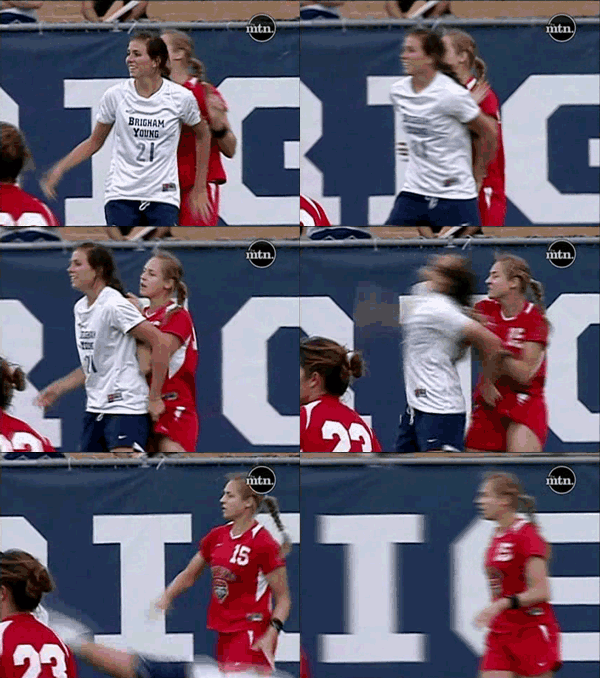
I mean, look how passionate soccer players are. Awesome.


2 
The Magic Question

I borrow this phrase from the theatre, though I think it might originally come from psychology or something. Whatever. Anyway, it's simply this: 


"What if _________?" 

I love this. It's so open, so filled with possibility. What if the world weren't actually made of rock and dirt, but it's actually some giant sleeping creature that starts to wake up? What if when you take a photograph you're actually creating a new alternate reality that begins inside that picture? What if my long-lost grandmother suddenly appeared and told me I was the princess of a tiny, wealthy kingdom in Europe? Oh, wait... You get the idea. 

The key is to hold nothing back. Let it all spill out--the silly ideas, the impossible ideas, the ideas that will never go anywhere. This can be done as a kind of exercise in creativity. You have to be willing to sound a bit ridiculous, a little crazy. But there are no truly bad ideas or stupid ideas--they're just ideas. They're not even stories yet. But they could be--somewhere in the dozens and dozens of What if? questions you pour out, there just might be a golden ticket to story inspiration.


3 
What terrifies you?

What's your greatest fear? What's that one subject you always avoid because it makes your blood turn cold and your chest constrict and your skin crawl? Is it the dark? It is spiders? Is it the thought of being alone in a strange place? 

Use your fears to bring real tension to your story. If you write about something you are afraid of, it will be much easier and more organic to translate that fear into your writing. 

For example, one of my fears is death, and especially of losing someone I love. This is a fear I drew on in writing ORIGIN; it's a topic Pia contemplates to some depth. I relate to her through her fear of losing her loved ones more than anything else, because I understand it. 

Building real, personal fears into your story not only makes it relatable to you, but probably to a lot of your readers as well. I'd say most of our fears are pretty commonly held by the majority of people--death, darkness, loneliness, etc. Fear makes your characters human. It makes them vulnerable, gives them that all-important Achilles heel. Once you know their deepest fear, you can exploit it--twist the knife in the heart, so to speak. Pry into their fear and force them to face it in a dramatic way.


*Zephyrance - don't wake me up. / Foter.com / CC BY-ND


4
History, Science, Art

The world is burning with untold stories. As writers, our primary concern is seeking out those stories and telling them. Sometimes inspiration doesn't necessarily begin with us, as in the previous points. Sometimes, it comes from outside--from a painting, a poem, a news story, a stranger sitting on a park bench. 

Mary Oliver said, "I think our duty as writers begins not with our own feelings, but with the power of observing." Exposing yourself to art, to history, science, nature, whatever, can be a great way to find a story. The key here is to always be alert.


Keep the Magic Question always in your pocket. No, scratch that. Don't keep it in your pocket--wear it like a pair of glasses, through which you're always seeing the story stuff of the world. Look at history this way--What if Abraham Lincoln were really a vampire slayer? Look at science. What if, ten years from now, invisibility technology becomes viable? And art. One of my favorites! (Hence my massive Pinterest collection). Photography, painting, sculptures, gosh--did you know they've got whole museums packed with the stuff? Good art not only comes from good inspiration--it's also becomes inspiring to others. And there's bookoos of it out there, so you've got no excuse, really, to not be inspired--especially if, like the good little writer you are, you're wearing your MQ glasses.


Tuesday, March 5, 2013

Mini-Lesson: How To Be An Author


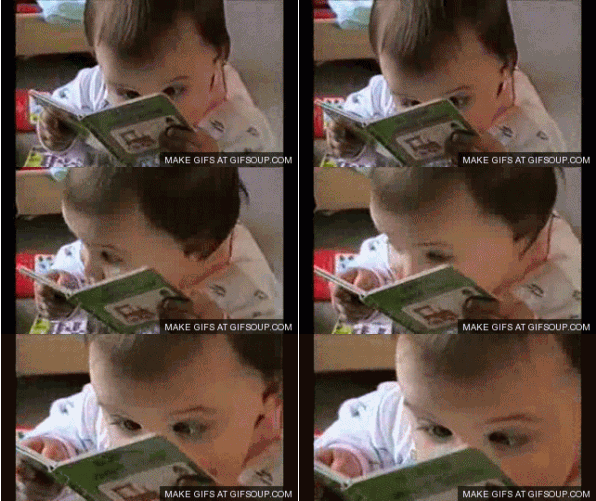
1. READ. Read everything. In your genre, outside your genre, fiction, non-fiction, classics, short stories, poetry, magazines, journals, history, science, the bottoms of tissue boxes and the back of your shampoo bottle. This is how you acquire new words and new ideas. This is how you know what's been done before and what works. This is how you learn what good writing is (or isn't, as the case may be). Lose yourself in libraries. Find new sections in the bookstore. Fall in love with books and reading and words and stories. Like this little guy:


2.WRITE. Write every day. Prose, poetry, diary, blogs, it all counts, and it's all important. Write badly. Write without using any punctuation marks. Use words you've never used before. Get funky with your thesaurus. You have to find your voice, your writing identity, your unique literary thumbprint. Explore with words and challenge yourself in impossible ways. Do NaNoWriMo. Join online writing guilds. Go to conferences and take classes. Write for yourself and for others and above all else, for gosh sakes, don't stop and don't give up. And if at all possible, write on a steampunk typewriter computer like this one, because COOL:


3. LIVE. (this especially to all you introverts like me!) Don't let your only experience of the world be vicarious. Go outside, meet new people, go to strange places, eat weird foods, do crazy and daring things. Go outside your comfort zone. Challenge yourself. Have adventures. The most important thing you will bring to your writing is your own personality, experiences, and emotions. Don't borrow all of that from books, moves, TV, etc. Get out and find your own!


4. BE QUIRKY. Be yourself! (see #3)


5. GET INVOLVED. Find other writers, either in person or online, and especially ones who are at the same stage as you are. Share your frustrations, your triumphs, your risks, and your failures. Connect with other writers because then you will know that you are not alone and that success is possible. When you have a bad day, when you're paper mache-ing bowls out of your rejection letters and you hate every word you ever put on paper, these are the people who will listen to you, hurt with you, encourage you, then pick you up off the floor, dust you off, and push you back in line. To write is to be intensely vulnerable. It's you pasting the tenderest parts of your identity to the wall and then letting any passing stranger chuck a tomato at them. You're going to need a wingman or two. You're going to need to know that you are not alone and that you are strong enough to take a few hits. Surround yourself with the ones who make you stronger. Surround yourself with the honest ones, the kind ones, the ones you'll be there for just as they are there for you.

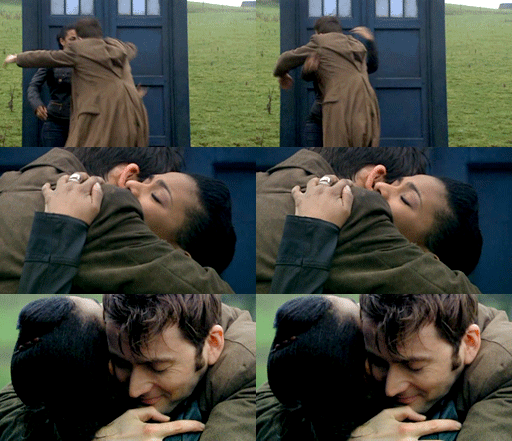
Be like the Doctor. Always take a companion. Hugs take two--even virtual ones!